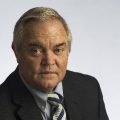
There’s a teardrop falling this day from jersey No. 44 high above the rafters overlooking the Dean E. Smith Center basketball court.
It’s long been retired there as a reminder that Larry Miller once passed the Tar Heels’ way.
“He was the most competitive person I’ve ever met in my life,” says Franklin Clark, 78, who played alongside Miller in the 1966-67 and 1967-1968 seasons that saw the University of North Carolina at Chapel Hill advance to the NCAA tournament Final Four, including a 78-55 defeat to Lew Alcindor-led UCLA in the title game on March 23, 1968, at the Los Angeles Memorial Sports Arena.
Miller grew up in the anthracite iron town of Catasauqua, Pa., where he was a high school Parade All-American, who led his team to the Pennsylvania Interscholastic Athletic Association Class A Eastern Finals. He averaged 33.6 points per game in a high school career and caught the eyes of college coaches throughout the country to include the late Vic Bubas at Duke and the late Dean Smith at UNC.
He chose UNC at the urging of UNC standout Billy Cunningham.
“Larry Miller was his first big-time recruit,” said Hooper Hall, 79, a walk-on with the freshman team after a standout career at old Fayetteville High School. “Larry and I swapped sweat during many practice sessions. Larry always wore weighted shoes and anklets. As far as I was concerned, he was the best ball player I ever had been close to. He was one of those strong guys. He was just thick, and he could jump. He was just a bear.”
A 6-foot, 4-inch small forward, Miller joined with senior Bob Lewis on the UNC varsity team, where the Tar Heels would finish 16-11 in the 1965-1966 season.
“Then he brought in Rusty Clark,” Hall said about Smith and five high school All-Americans, and Dean Smith’s basketball dynasty was underway at Chapel Hill, where the Tar Heels dominated the Atlantic Coast Conference and advanced to the National Collegiate Athletic Association Final Four the ensuing three years.


“He certainly was a major force in Carolina basketball,” said Clark, a 6-foot, 10-inch center out of Fayetteville High School and who attended UNC on a Morehead Scholarship after leading his FHS team to a 25-1 record and the N.C. High School Athletic Association 4-A title.
With teammates to include Dick Grubar, Bill Bunting, Charlie Scott, Clark and Miller, UNC finished 26-6 in the 1966-67 season and 28-4 in 1967-68.
Miller was the catalyst.
“He could win a game for you,” Clark said. “He did not want to lose. He was a fierce competitor.”
A southpaw, Larry Miller could shoot from the outside corners, and he possessed athleticism underneath the goal with acrobatic, turning and twisting maneuvers like a Harry Houdini.
“If the game was close and you needed to win, you went to him,” Clark said. “He was as good of an athlete as there was on the court. What made his athletic ability was he was competitive. You would just give him the ball and get out of the way.”
‘One of the Carolina greats’
Larry Miller was devilishly handsome, and something of a heartthrob in Chapel Hill on and off the court. There was a charisma about him. Every kid in the state with a basketball goal in his backyard wanted to be Larry Miller and emulate his basketball skills.

“He was the big man on campus,” Hooper Hall said.
Franklin Street was his oyster.
In old Carmichael Auditorium, Miller averaged 20.9 points and 10.3 rebounds per game as a sophomore; 21.9 points and 9.3 rebounds as a junior; and 22.4 points per game as a senior. He led UNC to back-to-back ACC tournament titles in the 1966-67 and 1967-68 seasons, and he was the league’s most valuable player in the regular season and the ACC tournament.
He earned the respect of fellow teammates and ACC foes and coaches alike, and the admiration of 1957 NCAA national champion of UNC legends to include the late Lennie Rosenbluth, Tommy Kearns, Pete Brennan and Joe Quigg.
“Larry Miller was one of the Carolina greats,” said Quigg, whose free throws in a third overtime led the Tar Heels to a 54-53 victory over the Kansas Jayhawks on March 23, 1957, for the national title and a 32-0 season under the late coach Frank McGuire. “He was the money guy. Anytime you needed two points, get the ball in his hands. He was so much fun to watch, because you could tell he was giving his all every time he played.”
Larry Miller saw his UNC basketball career come to a close in the NCAA finals against Lew Alcindor-led UCLA, where the Tar Heels lost 78-55 to the 29-1 Bruins, who were coached by the late coaching legend John Wooden. Miller was named to the Associated Press consensus All-America team, which included Elvin Hayes of Houston, Wes Unseld of Louisville, Pete Maravich of Louisiana State and Alcindor.
“It’s always a disappointment when you get that far,” Clark said. “UCLA had the best basketball team in that era. They were mighty good at every position. One thing about sports, you learn how to lose. It teaches you how to function in life. You’re not going to win them all.”
Clark would become a thoracic surgeon. Miller would spend seven seasons in the American Basketball Association, once scoring a league record 67 points before the league eventually folded.
Clark returned to Fayetteville, where he practiced medicine before retiring and becoming a real estate developer and now is doing his part for the Methodist University Cape Fear Valley Health School of Medicine.
“For me, it truly was a game,” he said. “It was always a game for me. It was a great time and a lot of fun. People don’t say anything about my medical career, but they sure talk about basketball.”
Miller, after his professional basketball career, went into real estate construction in Raleigh and Virginia Beach. He eventually returned to his hometown of Catasauqua, Pa., and lived out his life in his boyhood home, where his health declined in recent years.
The passing of a UNC legend
Lawrence James Miller died on May 11 in Bethlehem, Pa.
He was 79.
Franklin Clark says the loss of his old teammate is something he sensed coming, and recalls being with Miller for basketball reunions and a celebration in Hillsborough, where Miller and others joined with author Stephen Demorest in celebration of Larry Miller Time: The Story of the Lost Legend Who Sparked the Tar Heel Dynasty.

“You could tell his health was failing,” Clark said. “He was ready for assisted living type level of care, and he refused that, just going back to Catasauqua to live in his old family house. His life was not as glorious at the end as it had been, as is for so many of us. I could kind of tell where Larry was in life.”
Hooper Hall was there and says as much.
“It was the weekend he got inducted into the NCAA Hall of Fame,” Hall said. “I’d say October 2022. Rusty was there, Dick Grubar and Joe Brown. Some of his high school friends were there. Larry was not the Larry Miller I knew. He knew who I was. He had that recollection. But he was kind of subdued. He wasn’t the vivacious person I knew.”
Larry Miller was every college basketball coach’s dream athlete. Bill Currie, the late radio “Voice of the Tar Heels,” told us of his amazing athletic feats when games were on the line and Larry Miller was there to answer the Tar Heels’ basketball call for victory in the throes of defeat.
He was there before Michael Jordan, James Worthy, Phil Ford, Kenny Smith, Bobby Jones, Walter Davis, Eric Montross and those UNC legends of Tar Heels basketball lore.
“He’s going to be remembered as much as anybody,” Hooper Hall said. “He just kind of faded away, but Larry Miller is going to rank up there with them all. With 10 minutes to go in the game, it was “Miller Time.’”
A Tar Heel basketball athlete, Joe Quigg says, to forever remember.
“He was a once-in-a-lifetime player,” Quigg said. “Not sure they still make them like that.”
And from an old teammate who knew Larry Miller better than all of us.
“He was the most competitive person I’ve ever met in my life,” Franklin Clark said. “He just wanted to win and would do anything to win.”
Epilogue
Larry Miller was every kid’s hero who cheered for UNC from 1966 to 1968.
He was the genesis of Dean Smith’s basketball dynasty.
He was Houdini, and the swashbuckling athlete who always dared to defy the odds along Tobacco Road.
“I just fell in love with Carolina’s spirit basically and the campus,” Miller told Stephen Demorest in a YouTube interview years ago, “I felt really at home there.”
He was Larry Miller with the St. Christopher’s medal dangling around his neck and a UNC basketball legend, where there’s a teardrop falling this day from jersey No. 44 high above the rafters overlooking the Dean E. Smith Center basketball court.
Bill Kirby Jr. can be reached at billkirby49@gmail.com or 910-624-1961.
We’re in our third year of CityView Today, and so many of you have been with us from day one in our efforts to bring the news of the city, county, community and Cape Fear region each day. We’re here with a purpose — to deliver the news that matters to you.