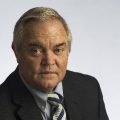
Seated at his late mother’s mahogany dining room table in the penthouse condominium overlooking downtown Hay Street, Menno Pennink was somewhat pensive in reflecting on his vision of downtown.
The wife he dearly loved tenderly placed her hands on his shoulders this spring day in May, 2022, and you could see that her touch brought him solace and peace.
“It’s getting there,” Pennink said of downtown, which once had become something of a ghost town, the result of the 1975 opening of Cross Creek Mall and urban sprawl. “But it could be better.”
He still believed in a thriving downtown, much like it was in the days of the 1950s and 1960s. That’s when you found families shopping at the department stores, stopping for lunch in The Capitol Birdcage, being greeted by the late John Hensdale at Belk-Hensdale, young soldiers looking for a perfect diamond ring at Hinkamp Jewelers, men calling on Leon Sugar for a suit and tie, teenagers in search of Weejuns shoes at Fleishman’s Big Store, or taking in the latest Hollywood film at The Colony, Miracle and Carolina theaters.
He saw an old Hotel Prince Charles could be more than a flophouse, but instead a gathering place for out-of-town guests, wedding receptions, Christmas parties, and New Year’s Eve celebrations in the ballroom overlooking downtown. He saw the shuttered Lafayette Hotel as more than an abandoned structure, just as he saw vacant infrastructure along Hay Street falling into ruins.
Menno Pennink dreamed of a vibrant downtown with culture and the arts.
Pennink died March 14, with his family by his side.
He was 90.
A celebration of life is scheduled at 4 p.m. on May 6 at Cape Fear Botanical Garden.
When it came to downtown, Menno Pennink saw its potential for revitalization in 1992.
He didn’t sit back.
He put his money, his heart and his soul into what could be.
Menno Pennink dared to dream.
‘He Truly Laid the Foundation’
“He always saw downtown the way I saw downtown, not as it was but as it could be,” said John Malzone, a longtime downtown property owner. “And he worked and invested heavily in the downtown area. He bought up a lot of properties to make sure that they were kept, and they were maintained properly so that future generations could see them.
“Menno had a great vision for the future of downtown.
“His real contribution was that he not only personally saw it, he transferred that love of downtown and the future of downtown to the next generation, and that’s what we all should be doing now,” Malzone said.
Pennink, a retired neurosurgeon, once described downtown as his “only patient left,” and a patient “on life support.”
Hank Parfitt, a retired urologist, owns City Center Gallery & Books downtown near the historic Market House with his wife, Diane.
“I knew Dr. Pennink from several perspectives,” Parfitt said. “We were both surgeons, we were fellow promoters of the arts, and we both had a passion for downtown Fayetteville. He was one of the first to recognize the potential value in these old buildings and the benefits of a thriving downtown to the whole community. He truly laid the foundation upon which many of us have been building ever since.”
‘Unless You Try’
Among those who shared Pennink’s vision is Elaine Kelley, who owns Turner Lane, the tiny gift shop just off Hay Street.
“I was very saddened to receive the news of Dr. Pennink’s passing,” said Kelley, who is a member of the Downtown Alliance of merchants. “In the days since, I’ve found myself thinking back on the many conversations we shared and the quiet, steady kindness he showed each time. I first met Dr. Pennink in 2009, when he gave me the opportunity to open Turner Lane in downtown Fayetteville, offering space for my quirky, hole-in-the-wall shop tucked off Burgess Street—something I had dreamed of as a second act, though I had little idea what I was doing in the truest business sense.
“He listened to my idea and encouraged me to try. He said, ‘It sounds like it means a lot to you. Give it a chance. You won’t know unless you try.’”
“I know his legacy includes many big and grand business ventures and projects, but the ones that may not receive as much notice are the investments he made in people,” Kelley said. “Those like myself, my neighbors and others who have built small businesses. He believed in and invested in downtown, and we are the return on that belief.
“The many projects he and his family supported over the years, along with the small businesses that continue to grow here, are part of what he helped make possible.
“He was a true gentleman—kind, talented and gracious,” Kelley said. “Downtown is stronger because of him. He will be greatly missed.”
‘A True Renaissance Man’

Ralph Huff partnered with Tommy Bradford and Pennink in construction of condominiums and offices at what is 300 Hay.
“He was a true Renaissance man with many interests,” Huff said. “Still learning Chinese at age 89. A humanitarian, philanthropist, musician, and lover of the arts. But no one had the passion, the dedication, and the investment in downtown more than Menno. I loved him dearly, and he will be sorely missed.”
Pennink was a gifted musician with a passion for the violin and the arts, which included his efforts to bring a Museum of Art to the city, and he believed Festival Park downtown was a perfect place.
“Well, I’ll tell you, Menno Pennink is just one of those folks who makes a place better simply by being part of it,” said Bob Pinson, the retiring president and chief executive officer of the Arts Council of Fayetteville | Cumberland County. “Around here, when you talk about the arts in Fayetteville, you don’t have to go far before Menno’s name comes up, and for good reason.
“He’s always had a real, genuine appreciation for what the arts bring to a community. Not just the performances or the exhibitions, but the way it brings people together, sparks a little joy and gives folks something to be proud of. And Menno didn’t just believe that, he showed up for it time and time again. What I’ve always admired is that he never made a big fuss about it. He just rolled up his sleeves, lent his support and kept things moving in the right direction. That kind of steady, behind-the-scenes commitment. That’s the kind of thing that builds something lasting.
“Truth is, a lot of what we enjoy today in Fayetteville’s arts community has Menno’s fingerprints on it, whether people realize it or not,” Pinson said. “And that’s a pretty special legacy. One rooted in care, consistency and a real love for this community. We’ve been lucky to have him.”
Health Care Trailblazer
Menno Pennink was born in Djakarta, Indonesia, the youngest child of four to Johan Pennink and wife Francoise Van Senden.
He was versatile.
He developed a love of music.
He was a deep thinker who looked beyond the horizon.
He found an interest and passion for the human body and health care, eventually arriving in Fayetteville in the 1970s, and where he was a radiologist and neurosurgeon at Cape Fear Medical Center.
He joined with other physicians in advocating for the first Computer Technology and Magnetic Resonance Imaging for hospitals in Cumberland and Moore counties.
“Dr. Pennink was an important trailblazer for health care for southeastern North Carolina,” said Mike Nagowski, the retiring chief executive officer for Cape Fear Valley Health. “Dr. Pennink was not only a champion for patient care, but the latest technology and techniques. His legacy continues here at Cape Fear Valley Health.”
Violin Along the Streets of Gold
You will find Menno Pennink’s fingerprints almost everywhere along Hay Street, from the Hotel Prince Charles, today known as The Residences at the Prince Charles; the Pemberton, Sandrock, Campbell, McKeithan lawyers and Point News structures; and the condominiums of 300 Hay Street. You’ll find those fingerprints on Cape Fear Medical Center, First Health of the Carolinas, and The CARE Clinic for the underserved.
Menno Pennink never stopped believing in what downtown Fayetteville could be.
“Dr. Menno Pennink leaves an extraordinary legacy in Fayetteville,” City Manager Douglas Hewett said. “His vision helped shape downtown, but his impact reaches far beyond that. It also lives on in the family he leaves behind.”
John Malzone says Pennink put “his money, his mind and his heart” into downtown and this community.
Longtime Fayetteville resident George Breece will tell you as much.
“Suzanne Pennink described her husband Menno as a ‘Renaissance Man,’ and that was the gospel truth,” Breece said. “Menno’s fingerprints and footprints are all over Fayetteville. From being a world-class neurosurgeon to being a developer to supporting the arts, whether it be a museum or a symphony, Menno led the way. Our community has been fortunate and blessed to have Menno come our way. Menno is certainly walking the streets of gold with his violin in his hand and the angels waiting to hear him play. What a good man Menno was, and what a shining example he left for all of us to follow.”
Epilogue
Menno Pennink appeared pensive on that spring afternoon in 2022 as he sat at his late mother’s mahogany dining room table with Suzanne Pennink’s hands upon a husband’s shoulders about his efforts to resurrect the Hay Street landscape and its once boarded up buildings.
He was humble.
Others were a part of his vision, he wanted all to know, and did their part, too.
“I’m proud of it,” Menno Pennink said. “And glad others are starting to realize it.”
Bill Kirby Jr. can be reached at billkirby49@gmail.com or 910-624-1961.
We’re nearing our fourth year of CityView Today, and so many of you have been with us from day one in our efforts to bring the news of the city, county, community and Cape Fear region each day. We’re here with a purpose—to deliver the news that matters to you.