For the next 18 months, a team of government officials and community stakeholders from Cumberland, Sampson and Harnett counties will examine how to create more affordable housing in the region.
The trio of counties comprises one of fourteen teams in the Our State, Our Homes program, a North Carolina program dedicated to developing solutions to the affordable housing crisis faced by counties, the state and the country.
“Housing is a basic, fundamental human need. We all need shelter,” Michael Welker, the program lead and director of policy and research partnerships for the ncIMPACT initiative, told CityView. Our State, Our Homes is part of ncIMPACT. “This is an issue that literally touches every life in every community in North Carolina.”
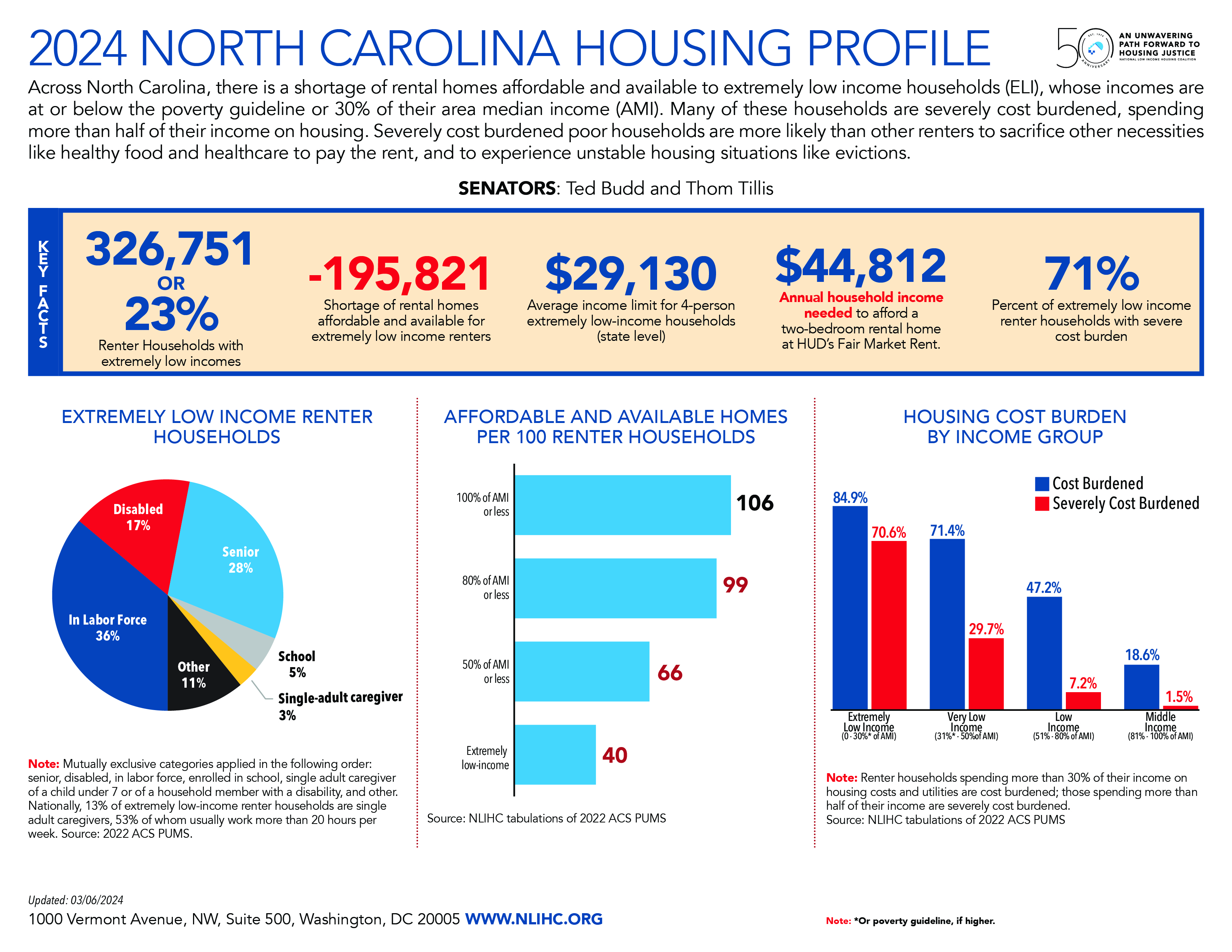
According to the National Low Income Housing Coalition, thousands of affordable rental units are needed to meet the needs of the poorest North Carolinians. Only 66 units are available for every 100 renter households that are making less than 50% of the state’s average median household income. Even fewer exist for extremely low-income families.
Without the money to make monthly rent or mortgage payments, many households face losing their homes. Cumberland County ranks 13th in the state for evictions with over 8,950 households facing an eviction filing in 2024 and another 382 households facing foreclosure on their homes the same year.
“The rising costs of renting and purchasing homes make it difficult for many residents, particularly low- and moderate-income households, to secure stable housing,” said Tye Vaught, Cumberland County community development interim director and the county’s representative on Team 10.
Our State, Our Homes
As Team 10 of the Our State, Our Homes program, Cumberland, Harnett and Sampson county officials are collaborating on ways to address the region’s affordable housing crisis. Together, they will gather key housing stakeholders and develop an action plan to increase the counties’ affordable housing stock.
“It’s essential to take a regional approach because many people work in one county but live in another,” Vaught said. “By collaborating across county lines, we can implement strategies that benefit the broader community.”
The plan will build on current government and community work, like Cumberland County’s affordable housing development subsidies and the City of Fayetteville’s Affordable Single-Family Housing Development Program, and create new strategies. Those strategies may come from the program’s five forums, where all 14 teams will gather in person to share ideas.
Welker is especially excited about the forums and the peer learning that happens when the teams come together. He said it’s part of “the magic” of the program.
“I hope that we see the best possible ideas, the most creative and inspired ideas from all these communities going through the cohort and bringing it to this challenge,” Welker said. “Because it’s a big, messy problem, and it needs all the best thinking that we can manage to take it on and to address it.”

Many of the team’s ideas will likely come from the resources offered through Our State, Our Homes. Our State, Our Homes is a sub-program of Carolina Across 100, which is run out of the UNC-Chapel Hill’s School of Government’s ncIMPACT initiative. Carolina Across 100 aims to tackle the impacts the coronavirus pandemic had on North Carolina by establishing partnerships and offering the university system’s resources to participants of its various programs.
For teams in the Our State, Our Homes program, these resources include the Development Finance Initiative, another initiative out of the School of Government. DFI will provide direct consultation to teams. That consultation will feature how teams can attract private investors for their affordable housing projects.
Our State, Our Homes also provides each team with $5,000 to support an affordable housing pilot project along with other funding for team members.
“We’re very excited about the tools and the resources that this program is going to provide,” said Sarah Arbour, a long-range planner for Harnett County and program manager for Team 10. “We’re looking to explore new models of affordable housing, enhance partnerships with developers and build our capacity for involvement in housing projects.”
While Team 10 is motivated to tackle the region’s affordable housing crisis, they’ve just started the work. Welker and other Our State, Our Homes program leaders held the program’s kick-off meeting two weeks ago on Jan. 16. Vaught, Arbour and other members of Team 10 met for the first time as a team this week.
From now until their first forum in Chapel Hill on Feb. 18 and 19, the team will need to: come up with a name for their collaborative, decide what stakeholders to include in the project and identify an affordable housing development success story to analyze and present.
The crises in Cumberland, Harnett and Sampson
Rental prices in Fayetteville have increased year-over-year since 2015, partially because of increases in the Army’s Basic Allowance for Housing. Rental costs for a studio and one bedroom are close to double what they were in 2015.
The fair market rent for a two-bedroom in Cumberland County is about $1,240 per month, 91% higher than in other parts of the state and country. Determined by the U.S. Department of Housing and Urban Development, the fair market rent represents the cost of “a moderately-priced dwelling unit” in a given local market. Fayetteville saw an almost 25% increase in that price for a two-bedroom unit just between 2023 and 2024.
A household must make about $49,600 a year or $23.86 per hour to afford fair market rent on a two-bedroom. However, half the county’s households make at or below $29,390 annually.
“There is a shortage of affordable housing in Cumberland County,” Vaught said. “It’s important to recognize that all housing is ‘affordable’ at certain price points, but for many residents, the available options are simply out of reach.”

The NC Housing Coalition found that more than a third of Cumberland County households are “cost-burdened,” meaning they pay more than 30% of their income on housing costs like rent or a mortgage. Renters make up almost half of 45,174 cost-burdened households.
In addition to being unaffordable for middle- and low-income residents, Vaught said many units are old and unsafe. In the City of Fayetteville, more than 45% of housing was built before 1979.
There are programs to help residents refurbish and afford housing, including the Rental Rehabilitation Program and the Down-payment Assistance Program, but Vaught said they don’t meet the demand for quality housing.
The demand in part stems from the county’s many residents who fall into one or multiple populations that are especially vulnerable to rising housing costs. Cumberland County has the highest veteran population in the state with over 52,380 veterans calling the county home.
Many residents are transitioning out of homelessness and some came to the county after losing their homes in Hurricane Helene, Vaught said. Black households, a demographic that’s faced generations of housing discrimination and who make up 40.2% of Cumberland County, are some of those hit hardest by rising housing prices nationally.

In Sampson County, a quarter of households are cost-burdened. Twenty-seven percent are cost-burdened in Harnett County. For Arbour, Our State, Our Homes will help determine why many Harnett County households struggle to afford their rents and mortgages.
While the program can help provide these answers and ways to tackle the region’s affordable housing crisis, Welker recognizes that one 18-month program can’t solve the problem.
“This is a big issue that has a lot of market forces behind it, a lot of big policy decisions that inform part of the current state of housing,” Welker said. “If we’re realistic, we’re not going to single-handedly solve North Carolina’s housing crisis.”
Team 10 recognizes that the Our State, Our Homes program is just the beginning of the region’s efforts to increase access to affordable housing.
“While this program is a significant step in the right direction, it is just one part of a broader effort to tackle the housing affordability crisis,” Vaught said. “Sustainable, long-term solutions will require continued collaboration at the local, regional, state and federal levels.”
CityView Reporter Morgan Casey is a corps member with Report for America, a national service program that places journalists into local newsrooms. Morgan’s reporting focuses on health care issues in and around Cumberland County and can be supported through the CityView News Fund.