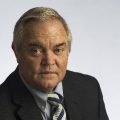
Gingerly, Willis McLeod would take his place at the podium and in his mind’s eye recall those tumultuous days of May 1963 when life wasn’t equal for all, and particularly for those born with Black skin.
That spring of racial unrest was a polarizing time in our downtown, and McLeod found himself right in the middle of the protests, the marches and the demonstrations in calling for equal treatment for every man and woman and child of the African American race.
“I am so thankful today that you brought my steps and the steps of all of these fine faithful people to this program,” McLeod would tell those who were on hand on June 16 for the unveiling of the Civil Rights Trail marker on Green Street and what once was the site of City Hall and now what will forever stand as testimony in commemoration of that spring 60 years ago.
Willis B. McLeod is chancellor emeritus of Fayetteville State University, and he gave us a history lesson on how students from what was then known as Fayetteville State Teachers College on nearby Murchison Road gathered downtown in the name of equality. But before McLeod would serve as the chancellor of FSU, he was president of the Student Government Association six decades ago, and McLeod was a face and voice of the downtown civil rights movement.
McLeod is in his 80s now but sound of mind and memories, and he was taking his time this day, because Willis McLeod had a story to tell about another time when Black men and Bblack women were relegated to segregation.
Blacks were denied sitting at the lunch counter of Woolworth’s five-and-time. Relegated to the balcony of the downtown movie theaters. “Whites,” the water fountains at Belk read. “Blacks,” the other water fountains read.
It was the downtown.
It was 1963.
And it’s just how it was.
But, McLeod would remind us, times were changing.
“In Greensboro and North Carolina A&T and this city, and the movement began to spread,” McLeod would say, referencing the Greensboro sit-in on Feb. 1, 1960, when NCA&T students were denied service at the F.W. Woolworth lunch counter on South Elm Street in the Gate City’s downtown
Known as the A&T Four, the sit-in participants would continue day after day, and the civil rights movement was growing and reaching throughout the South.
“We had taken so much,” McLeod would say.
‘Now, they will know’
McLeod’s words would resonate with those in attendance to include Fayetteville City Council members D.J. Haire and Shakeyla Ingram.
“I am only standing here today because of the courage and the resilience of those demonstrators,” Ingram would say of those involved in the Fayetteville cause. “ … I hope this will serve as encouragement for our youth and young adults to know that they can engage in the process of change-making. Not only are we here to change the present for ourselves, but we are also laying the foundation for a better tomorrow for years to come for those that come after us and just like the people that marched these very streets in 1963. I love knowing that young kids will be able to pass this sign and glean into history. Now, they will know.”
For Haire, the day brought back memories of the kitchen table where he grew up in his parents’ home.
“Now, as I look back, I understand what was taking place in my home when I was a boy,” Haire would say. “When I was a boy, pastors and other organizers from across the city would sit around at our table. I remember how the pastors would talk about what they were going to deliver to their congregations on Sunday to help improve the way of life for our Black community right here in the city of Fayetteville. So, today, it is very dear to my heart to stand and recognize so many. … There’s so many that stood in front of and against injustice, and I am so honored because I saw a lot of this planning going on in my own home, even though I was just a little boy. I didn’t know what was going on, but today I understand better and better.”
‘An exciting time, a rough time’
Willis McLeod would remember those who also were a part of the spring of 1963 to include pastors such as C.R. Edwards and Aaron Johnson and others such as Marion George, Joann Adams, Scipio Burton, Herbert Vick, Stanley W. Johnson and Cumberland County Commissioner Jeannette Council among the many.
He would remember, too, the late Mayor Wilbur Clark.
“I give a great deal of credit to Mayor Clark,” he would say. “He really wised up, and he called the business leaders together … and he formed what was called a biracial committee” that would call on downtown business owners to end segregation.
McLeod remembered, as well, the trauma of the demonstrations.
“The movement was an exciting time,” he would say, and a “rough time. … We became the center of attraction for those who opposed us and as we marched downtown. We were hackled and hollered at and called names.”
He would remember a threat on his life.
“I was arrested five times,” McLeod would say. “I was placed in the back of a squad car with a German shepherd sitting next to me. But we were not deterred because we had at times 400 to 500 people coming downtown, and it was my joy and honor to be in the leadership position of the group.”
Epilogue
Willis McLeod would leave us with an epilogue of his own to his history lesson.
“We have desegregated, but we have not integrated,” McLeod would remind this city and this nation of how far race relations and society have come. “Yet, we have changed behaviors, but we have not changed attitudes. We gotta do some attitude checks .… But I’m counting on you to write a new history. Yes sir, I’m counting on you young folks to write a new history.”
Bill Kirby Jr. can be reached at billkirby49@gmail.com or 910-624-1961.