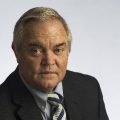
If you want to know anything and everything about the Cumberland County Headquarters Library on Maiden Lane downtown, then you might just want to spend some time with Joseph Westendorf.
He’s an encyclopedia of knowledge.
“Before 1900, there were no libraries” in Cumberland County, the library’s Local & State History Department Manager told a small but attentive audience Monday at the 40th anniversary celebration of the Headquarters Library. The facility was founded June 1, 1986.
Westendorf, 30, reminded us about other libraries that have been a part of the downtown landscape. There was the 1910 library founded by the Women’s Civic Improvement League; the main library (circa 1952) on nearby Anderson Street; the library for African Americans (circa 1955) on Gillespie Street; and the Frances Brooks Stein Library (circa 1970) in what once was the old U.S. Post Office on Hay Street.
What Westendorf didn’t tell us was that downtown was gradually falling into something of a ghost town with the coming of Cross Creek Mall in 1976. Downtown retail stores such as Sears, Belk, and J.C. Penny were relocating to the mall, and smaller retail businesses, too. It was a downtown known more for its seedy bars, nightlife, and drugs.
Then-Fayetteville Mayor Bill Hurley led the way on July 28, 1983 to demolish the bars and pubs along the 500 block of Hay Street at a time when some community leaders a year earlier were looking to build a new downtown library. Fayetteville was named an All-America City in 1985 by the National Civic League.
“They considered moving it to Cross Creek Mall,” Westendorf said.
Ultimately, relocation came to the Old Haymount School across the street from the old Highsmith Hospital, the historic Cumberland County Courthouse on Gillespie Street or the Dickinson Buick automobile dealership, which sat at the corner of Ray Avenue and Maiden Lane.
The automobile dealership was the choice.
“It was going to cost $16 million,” Westendorf said.
Library advocates Maureen Clark, Terri Union, Phyllis Melton, Joan Allen, and the late J.W. Pate and the late Bob Ray crossed their collective fingers that a 1982 county bond referendum would pass with enough community support.
“It failed by 55%, because there was a tax increase,” Westendorf said. “Terri Union, a member of the board of trustees, said ‘We all cried’ after the vote.”
Westendorf said the bond referendum included a 2.4-cent increase to the county’s property tax rate of 85 cents per $100 of assessed value With the 12.75% interest rates at the time, a 20-year bond would have resulted in $11 million in interest in addition to the $4.7 million cost of the library.
More than 17,000 county residents voted against the referendum, while 14,733 voted in favor.

Cumberland Community Foundation to the Rescue
Despite the setback, it led to what then was the largest and most successful private fundraising effort in Cumberland County history, raising $1.1 million for a new headquarters library.
“We especially would like to recognize the Cumberland County Foundation,” Westendorf said, “as they contributed $250,000 for the building (site), and rallied the community to raise $750,000, which allowed this project to go forward.”
Mary Holmes, the foundation’s president and chief executive officer, said the organization proposed the fundraising campaign to the county Board of Commissioners.
“The Cumberland Community Foundation went to the county commissioners and asked if we raised a million dollars, would they go ahead and build it,” Holmes told CityView. “They said yes. CCF granted $250,000 to purchase the site and then raised another $750,000, and the rest is history.”
The CCF board of trustees, according to Holmes, then was led by John Raper.
Terri Union, Maureen Clark, Bob Ray Joan Allen, and Phyllis Melton were among those leading the private fundraising effort.
“They succeeded in two months,” Westendorf said.
Donations in support of the Cumberland County Headquarters Library were large and small, we learned Monday from Westendorf. Donors includedMildred Grant, who gave $25, Elizabeth Fulton. who gave $10, and Chester Burks III and Patricia Carney, both who gave $5.
“And we should remember people like Virginia Thompson, who gave over $25,000,” Westendorf said, “and county commissioners who worked to get this started.”

‘The Best Thing I Ever Did’
Maureen Clark arose from the audience to remind the crowd what raising the money for the library was like and those who led the way.
“Virginia Thompson was here,” she said about the former chair of the Cumberland County Board of Commissioners. “And Charlie Rose was a big part of it,” she said about the late U.S. House member from Fayetteville. “Charlie Rose did so much for Cumberland County.” And, she said, librarian Jerry Thrasher and Terri Union would not take no for an answer when it came to a new downtown library.
Neither would Clark, who is a former editorial assistant for The Fayetteville Times.
“When I moved to Fayetteville and was working for the newspaper, I went to the downtown library to do some research,” Clark, 78, later told CityView. “I noticed the bookshelves were in an odd arrangement. The librarian said they were spaced to accommodate the buckets that caught rainwater when there was a downpour. She also explained that I would find nonfiction in a separate building three blocks away.”
When the bond referendum failed, Clark said she went to Terri Union, a library trustee, and signed on to help with a plan for a new library.
“I started with a visit to Sheriff Ottis Jones, a hardened Cumberland County politician, and asked him how to jump-start a dead effort,” she said. “He said there needed to be a variety of funding sources before asking for taxpayer money again. Joan Allen, Bob Ray, Virginia Thompson, librarian Jerry Thrasher, and library chairman John Griffin joined the group.”
Clark said she was tasked with finding federal funding for the library.
“Calls to D.C. took me to Sen. Mark Hatfield’s office, the man who supported public libraries,” she said about the Republican from Oregon. “His staff laughed when I told them I was from North Carolina. They said our senators Jesse Helms and John East did not believe in federal spending and advised me to get our Congressman Charlie Rose involved if we had any hope of getting library money.
“When Jerry Thrasher got notice that federal funding was coming our way, I agreed to head up Gov. Jim Hunt’s Senate campaign in Cumberland County, and we got a critical piece of the shared funding pie. Virginia Thompson encouraged the Junior League to purchase the land, another piece. Then our group went to work and raised over a million dollars in private contributions. We had enough money in the end to purchase and install a collection of North Carolina art in the new central library.
“By the time it came to the county commissioners for a vote that Sheriff Jones considered palatable, two thirds of the money was outsourced,” Clark said. “I’m not sure what kind of magic Virginia performed in the brief recess before the vote that night, but enough hands were raised in support to confirm we finally had a library.”
She smiled after Monday’s celebration.
“I told my daughter, Clair, when I die,” Clark said, “this is the best thing I ever did.”

‘Strong Libraries Help Build Strong Communities’
Kirk deViere, chair of the Board of Commissioners, joined with fellow commissioners Glenn Adams, Veronica Jones, and County Manager Clarence Grier in celebrating the 40th anniversary.
“For the last 40 years, this library has been a cornerstone of our community,” deViere said. “It has been a place where our community discovered more than books. Students found resources, families gathered, history was preserved, and community connections were made.
“Libraries have always represented opportunity. They provide free access to knowledge, technology, lifelong learning and new ideas. They help level the playing field by giving everyone access to the tools they need to succeed. But even more, libraries tell the story of our community. They preserve history, celebrate culture and inspire generations.
“I want to take a moment to recognize those who made this library possible,” deViere said. “The visionaries, community leaders, donors, library staff, and supporters who invested in this facility 40 years ago understood something simple: strong libraries help build strong communities.”
Jones said she grew up in libraries. Her mother was a schoolteacher and her sister once was a library trustee.
“I’m excited about the things they have here,” Jones said. “Reading can take you many places.”
Adams offered an interesting observation.
“Someone said that because of technology, we wouldn’t need libraries anymore,” he said. “My mother always said, ‘You can’t take away knowledge.’”
Grier credited his certification as a certified public accountant to spending time in the library at Campbell University.
“I spent a lot of time in libraries as a kid,” he said. “When I passed the CPA exam, it was because I spent a lot of time in the library.”
The library has known its share of setbacks, Westendorf said, which included a 2008 electrical fire in the administration area. The library was closed for six months. And there was Hurricane Matthew in 2016, when Cross Creek behind the library overflowed and damaged books had to be discarded. Still, the library remained open.
Today, the library has something for everyone, replete with traditional book lending, a public computer lab, an interactive learning area for youth, a teen space, and the Local & State History Room with genealogical archives, historical maps and local photographs and Fayetteville Observer microfilm.

Epilogue
Wanda Hunter, 75, was among those who came to celebrate the library’s 40th anniversary. She spent 30 years working at the library, first at the nearby Anderson Street location and then from June 1, 1986, until retiring in 2010.
“It brought people downtown,” Hunter said as she joined others for a peek at the beginnings of the America250 mural by artist Max Dowdle. Westendorf said the mural is funded in part by a grant from the N.C. Department of Natural and Cultural Resources.
Completion of the $13,400 mural, Westendorf said, “should be done by the end of the week.”
Wanda Hunter had a final thought about the four decades of the Headquarters Library, and those like Terri Union, Maureen Clark, the late J.W. Pate Jr., Virginia Thompson, Joan Allen, Phyllis Melton, the late Bob Ray, Mildred Grant, Elizabeth Fulton, Chester Burks III, and Patricia Carney—all among county residents who believed in what the downtown library could mean for his community.
“I think they would say,” Hunter said, “‘We did a great job.’”
Bill Kirby Jr. can be reached at billkirby49@gmail.com or 910-624-1961.