Not a seedy strip bar was to be seen Wednesday along the 400 and 500 blocks of Hay Street.
They’ve been long gone from downtown.
“He was a man whose name is forever tied to Fayetteville’s history,” Mayor Mitch Colvin said before the unveiling of the John William “Bill” Hurley monument at Hurley Plaza leading to Segra Stadium. “This monument is a reminder of Bill’s love for this city and the work he poured into it. He believed in Fayetteville’s potential and was one of the first to truly see what our downtown could become. The revitalization we know today started with a vision, and he supported that vision for the rest of his life.”
Hurley served two terms from 1977 to 1981 on the Fayetteville City Council before being elected as mayor in 1981, when the downtown had become something of a ghost town after Cross Creek Mall opened in 1976. Seedy bars, illegal drugs and downtown prostitutes became a calling card and something of the downtown catchword across the state.
Residents abandoned the downtown, and business owners too.
Bill Hurley saw what the once bustling and family-minded downtown of the 1950s, 1960s and early 1970s had become, and what it could be again.

“Today, we dedicate Hurley Plaza — an everyday gathering place named for a leader whose ideas were anything but everyday,” Mayor Pro Tem Kathy Keefe Jensen said. “Mayor Bill Hurley was a visionary. He looked at a downtown many had written off, and imagined safer streets, thriving storefronts and spaces where people connect.
“He didn’t just talk renewal. He did it.
“He understood identity, declaring us ‘The City of Dogwoods’ and helping launch the Dogwood Festival, said something lasting. This community is worth gathering for, investing in and celebrating. That spirit helped spark the vitality we enjoy today. Standing at the gateway to Segra Stadium and our growing entertainment district, you can see his vision still working.
“This plaza isn’t a finish line,” the mayor pro tem said. “It’s a handshake between past and future, and a charge to keep saying yes to bold ideas, improve the blocks in front of us and build a downtown that welcomes every neighbor and visitor.”
City Manager Douglas Hewett said Bill Hurley’s foresight is a testament to what one man’s vision can mean for a city.
“Mayor Bill Hurley saw possibility where others saw limits,” he said. “He championed a downtown that welcomed families, celebrated the ‘Dogwood’ spirit and reminded us that small, steady acts of care can change how a community feels about home … May Hurley Plaza stand as a daily reminder of vision, pride and possibility.”
‘It’s coming down’
Longtime downtown businessman John Malzone remembers negotiations with downtown nightclub owners who thrived and were unwilling to work with the city to rid Hay Street of the suspect nightlife and prostitution.

“They didn’t want to do it,” Malzone said Thursday, “so, that’s when Bill said, ‘It’s coming down.’”
On July 28, 1983, the wrecking ball began clearing the 500 block of Hay Street, which once was home to nightlife bars and strip joints to include the Pop-a-Top Lounge, the Nite Cap, the King’s Den, the Seven Dwarfs, The Town Pump and Rick’s Lounge among them, and in 1985 Fayetteville earned distinction as an All-America City from the National Civic League.
“One of his proudest moments as mayor came in 1985, when Fayetteville was named an All-America City for the very first time, proof that when our community came together, we could accomplish something great,” Colvin said. “Bill helped lead us to that moment, and it was one he never forgot. Today, we can say with pride that Fayetteville is a four-time All-America City, with our most recent recognition coming in 2023.”
Today, you’ll find the Airborne & Special Operations Museum, a medical arts center, City Hall, the Fayetteville Police Department and Hurley Plaza welcoming baseball fans to Segra Stadium, home of the Minor League Fayetteville Woodpeckers, adjacent to Festival Park, where in 1982, Hurley declared Fayetteville as “A City of Dogwoods.” Today, the Fayetteville Dogwood Festival at the park is the city’s signature event each spring.
Remembering a husband’s dream
Sandy Hurley would remind us of her late husband’s vision, which would lead to this day.

“This is a fantastic, wonderful day for us,” she said before joining with sons Mark Hurley, Brad Hurley and Todd Hurley in unveiling the monument. “I cannot express the joy that’s in my heart.”
She recalled a husband’s dream of a baseball stadium downtown.
“I can remember as a young married couple and he would say, ‘We need a baseball field in the middle of the city,’” she said. “I thought, ‘My goodness, where are they going to put it? But he had vision — a lot of vision — and rapport with people. He would say, ‘You know, I don’t know how to do this, but I know people who know how to do this.’ He was like a Trojan warrior going forward with every ounce of energy he had. I thank all of you and the city of Fayetteville for doing this. I’m humbled. Our whole family is humbled.”
A groundbreaking for the stadium was held Aug. 21, 2017, and Bill Hurley was there. The Woodpeckers played their first game in the stadium on April 18, 2019.
Mark Hurley said he can remember being age 10 and hearing his father talk about a baseball stadium downtown.
“He never gave up,” he said. “We drove by in November,” when Bill Hurley’s health was declining. “He said, ‘I hope I can see a game there.’ But he never did.”
You could see the pride on a son’s face as he thought of his father.
John William “Bill” Hurley died Nov. 26, 2018. He was 85.
For Brad Hurley, the monument gave him reflection.
“All I could think about was that Dad would have passed all the credit to everyone around him,” he said. “He never seemed to be impressed by people who were trying to give him credit or accolades. Some had suggested that they wanted to see a statue of Dad at the baseball stadium, but I can tell you that he would never have gone for that. But he would be very humbled to know that this monument has been dedicated to his efforts. He truly loved this town.”
Todd Hurley called the dedication a poignant moment.
“It’s a tremendous honor and very humbling to have Dad remembered this way,” he said. “Dad loved all sports, but he loved baseball the most, so this means a great deal to the family because it captures both his public and private persona. I hope the monument will serve to both remember Dad’s legacy and inspire folks to get involved and become leaders in their community. I’m very grateful to the city for honoring him.”
‘May others follow in his footsteps’
Son of a Methodist preacher, John William “Bill” Hurley moved to Fayetteville in 1955 and always had a calm demeanor as a three-term mayor and later in his six terms in the N.C. House.
He would be the first to tell you that he didn’t alone revitalize downtown or the 400 and 500 blocks of Hay Street, and that city council members Milo McBride and the late Milt Wofford, the late Mildred Evans, the late J.L. Dawkins, the late Jimmie Jones and the late Aaron Johnson shared his vision. He would be the first to tell you he may have named us the “City of Dogwoods,” but the annual Fayetteville Dogwood Festival would not be what it is without John Malzone and the late Jimmy Little.

“Bill Hurley was a gentleman’s public servant,” George Breece, this community’s longtime politico, said Friday. “Bill was the driving force and so instrumental in the turnaround and revitalization of downtown Fayetteville. His time on the Fayetteville City Council, his three terms as mayor and his six terms in the N.C House made Bill one of the most popular elected officials of his times.
“From founding the Dogwood Festival to helping lead the clean-up of Hay Street, Bill changed the trajectory of Fayetteville’s image forever. No one deserves the Hurley Plaza on his beloved Hay Street more than Bill.
“God bless his memory,” Breece said, “and may others follow in his footsteps and do as Bill did — write their names in John Hancock-size letters across his and our beloved city of Fayetteville.”
Epilogue
If a picture is worth a thousand words, nothing was more poignant Wednesday than seeing the youngsters reaching out and touching the monument for the great-grandfather they never knew.
“I had so much excitement in my heart,” Sandy Hurley said, “mainly that his great-grandchildren can show their children their heritage and the importance of giving back.”

And from one city mayor to another city mayor:
“He understood that a strong community is built when leaders roll up their sleeves, get involved and lead by example,” Mayor Mitch Colvin said. “And that’s exactly what he did throughout his life.
“Bill Hurley loved this city. His leadership, his ideas and his belief in Fayetteville helped lift our community and left a foundation we’re still building on today. As we unveil this monument, may it stand as a reminder of his passion and his dedication.
“Fayetteville is better today, because of Mayor Bill Hurley,” Colvin said, “and we are grateful for the lasting mark he made on our city.”
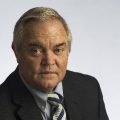
Bill Kirby Jr. can be reached at billkirby49@gmail.com or 910-624-1961.
We’re nearing our fourth year of CityView Today, and so many of you have been with us from day one in our efforts to bring the news of the city, county, community and Cape Fear region each day. We’re here with a purpose — to deliver the news that matters to you.