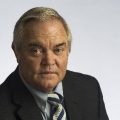
Retired radio broadcast journalist Jeff Thompson is remembering the late Jimmy Carter as an American president who was true to his word.
Carter was evolving as something of a national face and voice of the Democratic Party, when the then-Georgia governor was visiting with his late sister, Ruth Carter Stapleton, who lived on Devane Street in Haymount.


“He joined me in the studio at WFNC as ‘Jimmy Who,’” says Thompson, 83, who was the no-nonsense news director for the WFNC 640 A.M. station. “He told me then that he would do another interview if he ever returned to Fayetteville.”
Carter was inaugurated as the 39th U.S. president on Jan. 20, 1977, after defeating Republican President Gerald R. Ford in November 1976, and in the wake of the Watergate political scandal that ultimately forced President Richard M. Nixon to resign in disgrace on Aug. 9, 1974.
Carter was back at his sister’s home on Dec. 17, 1977, when Thompson says the president kept his word for another radio interview, this one by telephone.
“Good morning, Mr. President,” Thompson said in a transcript of the interview that Thompson provided to CityView.
“Good morning, Jeff,” Carter said. “Can you hear me all right?”
“Yes, fine, thank you,” Thompson said. “We’re very honored and privileged that you took the time to call. Thank you, sir.”
The call was Jimmy Carter’s promise made, and Jimmy Carter’s promise to keep.
“Well, during the campaign, I told you I would when I came back to Fayetteville,” Carter said, “and I wanted to honor my promise.”
Thompson interviewed countless politicians in his 52-year radio career, from state governors, congressional leaders and N.C. General Assembly senators and representatives. But this was one of those hallmark interviews with the nation’s president.
Middle East conflict
Thompson made the most of the five-minute call from Carter. Thompson never was one for softball questions. And he wasn’t on that December morning of 1977.
“Your meeting with Prime Minister Begin yesterday, to be followed upon your return to Washington by another, suggests some imminent urgency in progressing developments in the Middle East,” Thompson inquired about the conflict between Israeli Prime Minister Menachem Begin and Egypt President Anwar Sadat. “Can you tell us your administration’s current role in that conciliation effort?”
Carter long wanted a resolution for the feuding nations.
“Well, our role is the same as it always has been, to encourage direct negotiations between the nations involved in the Middle East dispute and to give support whenever they call on us,” Carter told Thompson. “We also are very insistent that they do as much as possible on their own, and we want to be sure they trust us to relay messages accurately and to describe accurately the positions of the leaders who, quite often, have not communicated at all in the past. Prime Minister Begin will be meeting with President Sadat within another week or so, and both he and Sadat communicate with me quite frequently to give me their positions. We think this is a good step toward a comprehensive peace. Although it will involve primarily the two leaders from Egypt and Israel, we hope that Jordan, Syria, Lebanon will come in later on if progress can be made.”
Carter, after the Camp David Accords, stood proud on Sept. 17, 1978, when the Egypt–Israel peace treaty was signed by Begin and Sadat in Washington, D.C., after 12 days of negotiations at the presidential retreat in Frederick County, Maryland, for private diplomatic meetings with foreign leaders and heads of state dating back to World War II.
Tobacco and the military
Thompson queried the president about an effort by Congress to reduce or abolish a price support program for tobacco that could have significantly impacted this state’s tobacco farmers.
“Although you have supported the support program consistently,” Thompson wanted to know, “can you say categorically that you would veto any legislation that would reduce or abolish the tobacco support program?”
Carter would not mince his words.
“Well, as you know, tobacco is just as important for Georgia as it is North Carolina,” he said, “and the tobacco support program will not be abolished while I’m president.”
Thompson also knew the significance of our neighboring military base, now Fort Liberty, but then known as Fort Bragg with its adjacent Pope Air Force Base. Carter, as commander-in-chief of the Armed Forces, announced in July of 1977 that he was canceling production of the B-1 bomber.
“In view of your decision to stop production of the B-1 bomber, I’m sure a lot of our listeners in the Fort Bragg area would like an assessment from you on our nation’s defense stature,” Thompson asked the president. “It seems to have been slipping a bit at a time when the Russians are still in a position to capitalize on expansion of their own defense posture. How, in a few words, do you assess our country’s military readiness in terms of present and immediate needs?”
Carter, according to published reports, was concerned about the B-1 vulnerability to Soviet defenses, although his decision may have been based on the development of a stealth bomber aircraft. There also were the escalating costs of the B-1 bombers.
He offered Thompson a detailed explanation of his decision.
“As a matter of fact, during the years immediately following the Vietnam War, our defense effort did decrease,” Carter said. “But under President Ford and continuing under me, the contribution for our defense effort has gone up in real dollars. In other words, we’ve compensated for the inflation rate and then added on top of that an additional amount to increase our defense spending — quite a reversal of what had been done in the past.
“This is a nationwide commitment. We are trying to focus our attention on the elements of our defense posture, which I think were in most serious need, immediate strike forces on hand in this country, as is the case with Fort Bragg. We are strengthening our forces in NATO [North Atlantic Treaty Organization]. We’re trying to encourage our NATO partners to do the same, whereas in previous years, I think their commitment to NATO had been decreasing somewhat both in financial contribution and also in attitude.
“So, our defense posture will be kept strong,” Carter said with assurance. “We have a very fine research and development and testing and evaluation program going on with new weapons. And in technology, in competence, I think that our military forces are unexcelled in the world. The Soviets do have a superiority in some respects — the number of tanks, for instance, in Europe. But as you know, we’re trying to make sure that those tanks are vulnerable, and also, we’re developing new weapons of our own. So, I don’t think anyone needs to worry about the United States being second in total military strength to anybody.”
A people’s president
Carter, a peanut farmer from Plains, Georgia, was known for his down-home and unpretentious ways, and his televised “fireside chats,” and wearing a cardigan sweater by a crackling fireplace in the White House library.
“In contrast to recent past administrations, you have continued your campaign image of being very approachable,” Thompson said. “Has it paid off for you? Do folks feel there is an open door at the White House?”
Carter wanted to be a president who people could feel close to just as they felt by him in Plains, Georgia.
“Well, I hope so,” he told Thompson. “It pays off not just in that respect that you’ve described, but also it gives me a sense that when I make a final decision on a very controversial issue, that the American people have been included in the debate, that they have been aware of the developing decision. And whether it’s the Middle East issues or defense or agriculture programs or whatever, we’ve tried to get a maximum amount of contribution and advice and counsel, support and, sometimes, criticism from people all around the nation.”
Carter said he had met with newspaper editors and radio and television executives from 47 states during his first year in the White House.
“Quite often, these are questions that are important just on a local area,” he said. “And in that process not only do they learn about their president and their government’s attitude, but I also learn about their attitude, which makes it much more likely that when I make a final decision it’s compatible with what the American people want. So, the accessibility thing is a two-way street. The people benefit from knowing what I plan and what I am doing. I learn on a daily basis in the White House what the American people want done.”
‘Most powerful position in the world’
Time was running short, but Thompson had a closing inquiry of Jimmy Carter.
“Mr. President, very briefly, one final question,” Thompson said. “It’s been almost a year now for you as president. A lot of those campaign promises have probably been more difficult than perhaps you imagined. How does the responsibility of holding the single most powerful position in the world differ from what you expected before taking the oath?”
It was a good question from Thompson, and a thoughtful response from the president.
“Well, I think the difference between what I expected and what was sometimes covered by the news media has been different,” Carter said. “When someone running for a four-year term of office makes promises to do certain things — in the Middle East, in defense, in agriculture, in education, Social Security, energy — that doesn’t mean that you think you can do it the first year and that nothing will be left to be done the other three years.
“Another point to be made is that I can evolve a comprehensive program in energy, in welfare, Social Security, and present it to the Congress much more rapidly than the Congress can actually pass it into law. So, there’s always a delay, inherently in our system, for Congress to take action on a proposal made by the president. I believe that we’ve made excellent progress. And when an inventory is conducted of what this Congress did achieve, I believe the American people will be very pleased and very thankful.”
Carter told Thompson that he believed his administration, including Vice President Walter Mondale, was on the right path.
“The only major disappointment that I have experienced is not getting the comprehensive energy package passed,” he said. “But I think this will be done early next year. The conference committees are still at work. And this is probably the most complicated, complex, confusing and politically divisive issue that the Congress has ever attacked in the last 200 years. It is so confusing to simultaneously try to resolve, I think, 113 different proposals that we’ve presented to the Congress just on the energy question alone. And since our nation is both a producing country — one of the largest on earth — and also the biggest consumer nation on earth, there’s an inherent conflict. But the Congress has performed superbly, in my opinion. We’ve had a good relationship between the White House and Capitol Hill. And I believe that those important issues to the American people will be realized and handled very well.”
Fayetteville hospitality
Thompson thanked Carter for his time, with an invitation to come back to Fayetteville again.
“Thank you, Jeff,” the president said. “I’ve been pleased; so has my whole family, at the friendship and hospitality that was extended to us yesterday on our arrival here. It gave us a chance to get our family together, which is a rare occasion for us now. I’ll always remember the confidence that North Carolina people had in me both in the primary and the general election. I’ve tried to act in the White House in such a way to make the North Carolina people proud of me.”
Jimmy Carter served one term before losing his bid for a second term in a landslide defeat to former California Republican Gov. Ronald Reagan, whose candidacy, history tells us, was buoyed by frustration over inflation, unemployment, an energy crisis and the more-than-yearlong Iranian hostage crisis when American diplomats and civilians were stormed and captured by followers of Ayatollah Khomeini on Nov. 4, 1979 at the U.S. embassy in Tehran. The hostages were released as Carter departed Washington following Reagan’s oath.
Carter, in civilian life, would continue his quest for international peace and his humanitarian efforts toward social justice for which he was awarded the Nobel Peace Prize in 2002.
Epilogue
James Earl Carter Jr. died Dec. 29 at his home in Plains, Georgia.
He was 100.
“He was a man of his word,” Thompson says. “He never lied and always told the truth.”
A nation today is paying final respects to Carter at the Capitol Rotunda in Washington, D.C. before Thursday’s public funeral scheduled for 10 a.m. at the Washington National Cathedral. Special Air Mission 39 later will take the late president to his boyhood home of Plains, Georgia, for a 3:45 p.m. private service at Maranatha Baptist Church, where Carter taught Sunday school for many years after his presidency.
“I will watch Carter’s funeral and have watched the preliminaries leading up to it,” says Thompson, who left his radio career behind in 2015 after working at WIDU 1600 A.M. “He has a special place in my heart having had the opportunity of interviewing him twice. The Camp David Accords were a remarkable achievement given that Egypt and Israel remain at peace to this day.
“Clearly, President Carter was a remarkable humanitarian.
“He accomplished more in the aftermath of his presidency,” Thompson says, “than any other free world leader did while in office and thereafter.”
Bill Kirby Jr. can be reached at billkirby49@gmail.com or 910-624-1961.
We’re in our third year of CityView Today, and so many of you have been with us from day one in our efforts to bring the news of the city, county, community and Cape Fear region each day. We’re here with a purpose — to deliver the news that matters to you.