You are on the night shift.
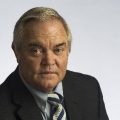
You are a young police officer, along with others, charged with executing a search warrant in a Bonnie Doone home where illegal narcotics are suspected by the Fayetteville Police Department.
It’s near midnight on March 20, 2002.
“There were people in the house,” Kemberle Braden says of those early years of his 27 years with the Police Department. “I was in the living room. I saw one run out the front door.”
Braden didn’t see the teenager in an adjacent room.
“He was shooting at me through a wall,” Braden, 48, says.
Five times the teenager would send an arsenal of bullets through the sheetrock, and Braden would take them all.
“One in the arm, three in the vest and one in the right hip,” he says. “I was still trying to get in the door. The one in the arm lodged in my elbow. Then came the one in the right hip. That one put me down. I fell back on my back. I took five bullets before I returned fire.”
Three bullets to the chest likely could have ended Braden’s life at age 26. The bulletproof kevlar, we can only imagine, likely saved his life.
“The three rounds stopped by the bulletproof vest,” he says, “still had associated blunt force trauma that caused injury” to include cracked ribs and bruising.
The young police officer was rushed by paramedics to Cape Fear Valley Medical Center, where he underwent immediate surgery. Inside the ambulance was Braden’s brother, William, from Providence, Kentucky, a lawman who had accompanied the officers on a ride-a-long. William Braden now is sheriff in Webster County, Kentucky.
Less than four months earlier, Fayetteville police Officer Roy Turner Jr. had been fatally gunned down on Nov. 29, 2001, while patrolling a crime area near Moore and Hillsboro streets downtown. The 32-year-old officer had been with the Police Department for five years.
Braden recalls the ambulance ride to the medical center, a familiar scenario in that he was an emergency medical technician first responder before becoming a police officer.
“Remember, I was once an EMT,” he says. “I knew my arm was not that bad. I didn’t know about my hip. I knew I wasn’t going into shock. I knew I wasn’t bleeding out. I’m on a gurney, but I had a strong suspicion I wasn’t going to die. But how bad I was hurt, I didn’t know.”
He would know soon enough.
“I don’t remember hurting until I woke up after surgery,” he says.
There was no pain, he says, during the exchange of gunfire, when you are caught up in the adrenaline of the moment.
Ron Braden, a police chief from Providence, Kentucky, was in town the night his son was felled by the gunman, and Ron Braden was at the medical center when Kemberle Braden was in recovery.
Kemberle Braden remembers he couldn’t move his arm or his leg, and he wondered to his father about life as a policeman.
He describes it as a paradigm in his career.
“This was a fun and exciting job,” Braden was saying on Dec. 14 at a community meeting where he and fellow Assistant Chief James Nolette fielded questions at City Hall about their qualifications to serve as the next police chief.
“You look at it a lot differently from the view of a hospital bed. I remember speaking with my father, who was still alive at that point in time, and he was there when I woke up from surgery and he said, ‘How are you?’ I said, ‘I can’t do this anymore.’”
All eyes were on Kemberle Braden as he told the story of March 20, 2002.
A father’s words
Ron Braden was a Special Forces soldier on Fort Bragg before becoming a police officer and eventually the police chief in Kentucky.
He told me ‘That’ OK,’” Kemberle Braden would finish his story on that evening in City Hall. “He told me, ‘You can quit, but you can’t quit from a hospital bed.’ He said, ‘You’re going to put your uniform on and you’re going to get back in the front seat of your patrol car, and that’s where you can quit from.’ I think what he knew that day was that I was hurting both mentally and physically. I think he knew that I needed time to heal, and I think he knew that I needed to figure some things out.”
Kemberle Braden says it was not a Hallmark TV moment.
“It was more him as a Special Forces guy,” he says. “And not the time to be thinking about it.”
Often, Kemberle Braden recalls his father’s words, and when Kemberle Braden could have left a career as a policeman behind.
“After any critical incident, your emotions are high,” he says. “The shock. The anger. The fear. You are still working through all of that. That’s all you have is time to think when you are bed-ridden, and when you are hurting.”
Kemberle Braden would return to his police duties in the fall of 2002, and he would be called to execute another search warrant in Bonnie Doone, just off Bragg Boulevard, and then known for illegal drug trafficking.
“The very first search warrant was around the corner from where I got shot,” he says. “That was weird. Same area. So many similarities. The first thing I did when I got back was I told Sgt. Tom Bahler that, ‘If I hesitate, you let me know, and I will quit tomorrow.’ He was reassuring.”
Epilogue
Kemberle Braden would rise through the ranks of the Fayetteville Police Department under police chiefs to include the late Tom McCarthy, Tom Bergamine, Harold Medlock and Gina Hawkins. Today, he is an assistant police chief in charge of field operations supervising patrols and investigations, and he will become the city’s 25th police chief since 1832, when Hawkins retires Jan. 17 after 5½ years.
A date and venue for Braden’s swearing-in has not been determined, according to the city.
Often, Kemberle Braden thinks back to a father’s words.
Ronnie C. Braden was 71 when he died June 19, 2015.
“I could very easily made a different decision,” Kemberle Braden says. “I don’t regret anything I’ve done.”
Your support helps ensure a more informed community. Donate today.
Bill Kirby Jr. can be reached at billkirby49@gmail.com or 910-624-1961.